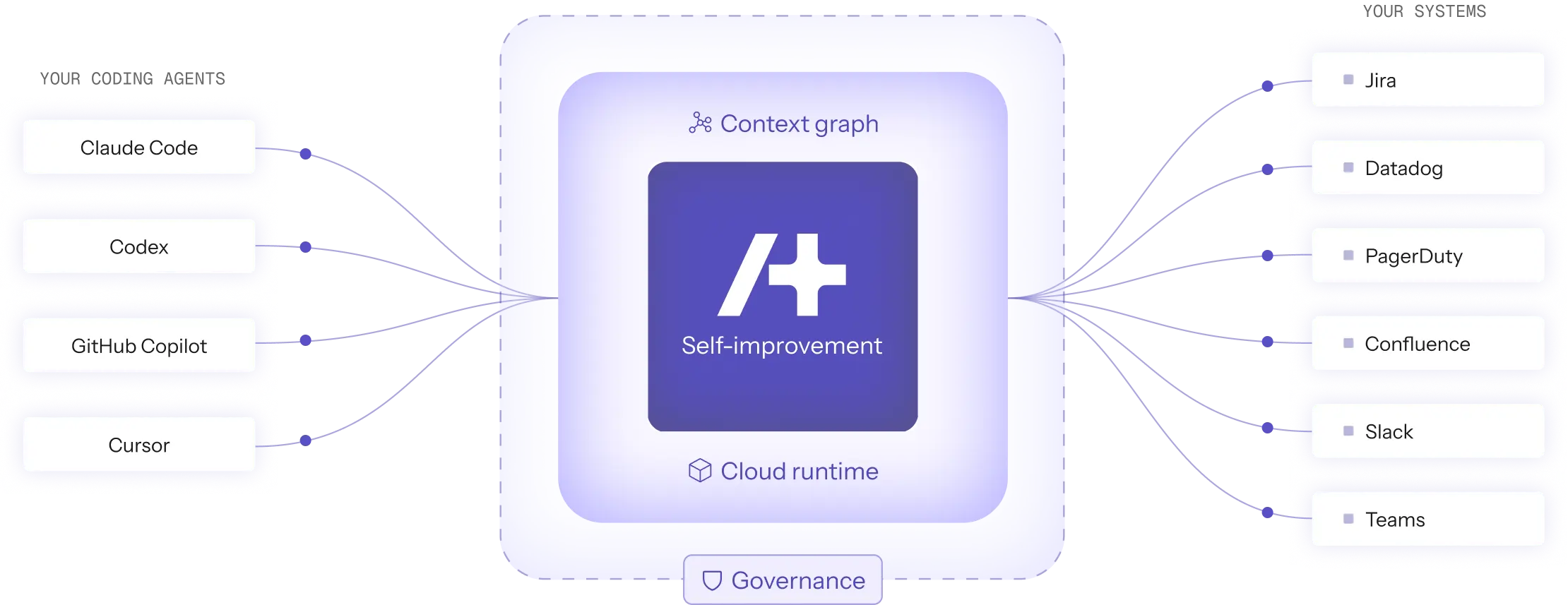
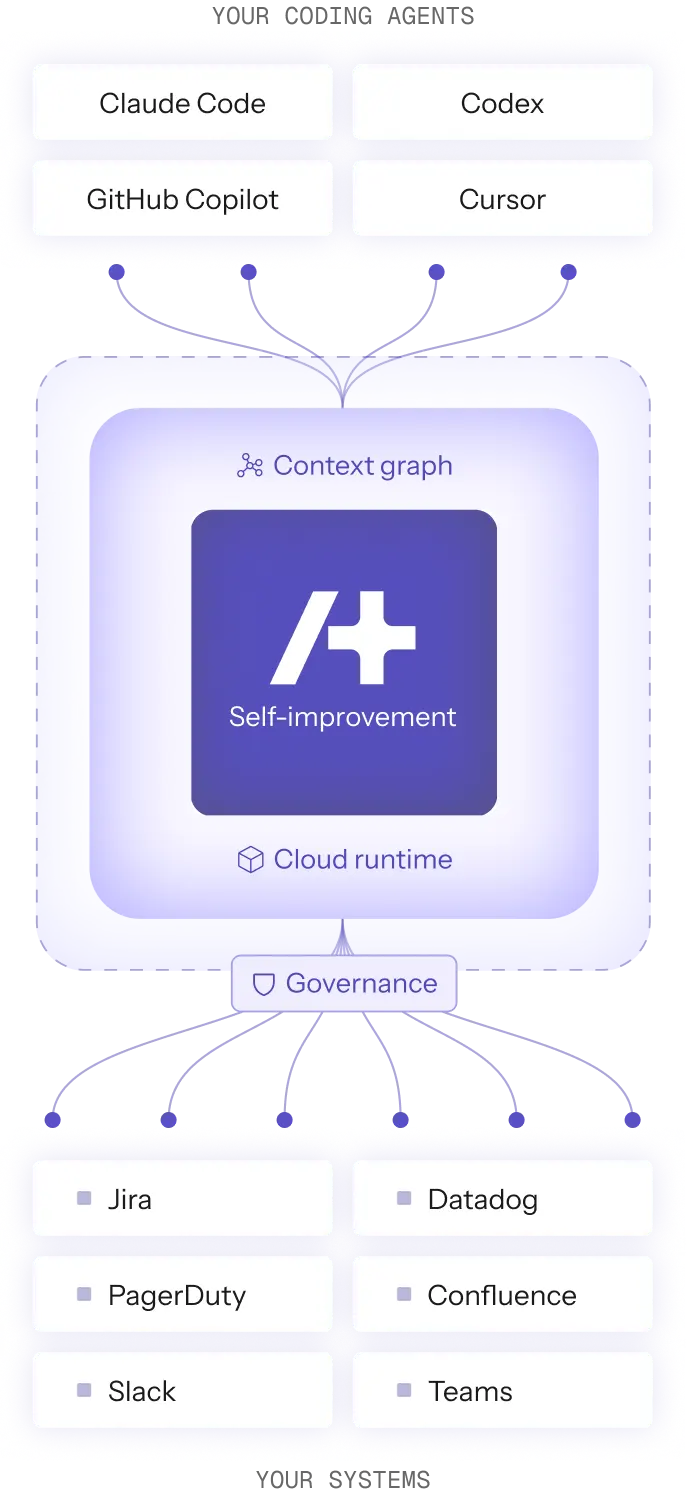
Self-improvement
Context graph
Cloud runtime
Governance
Evaluator and healer agents score each worker run and test fixes. Engineers approve every change in git.
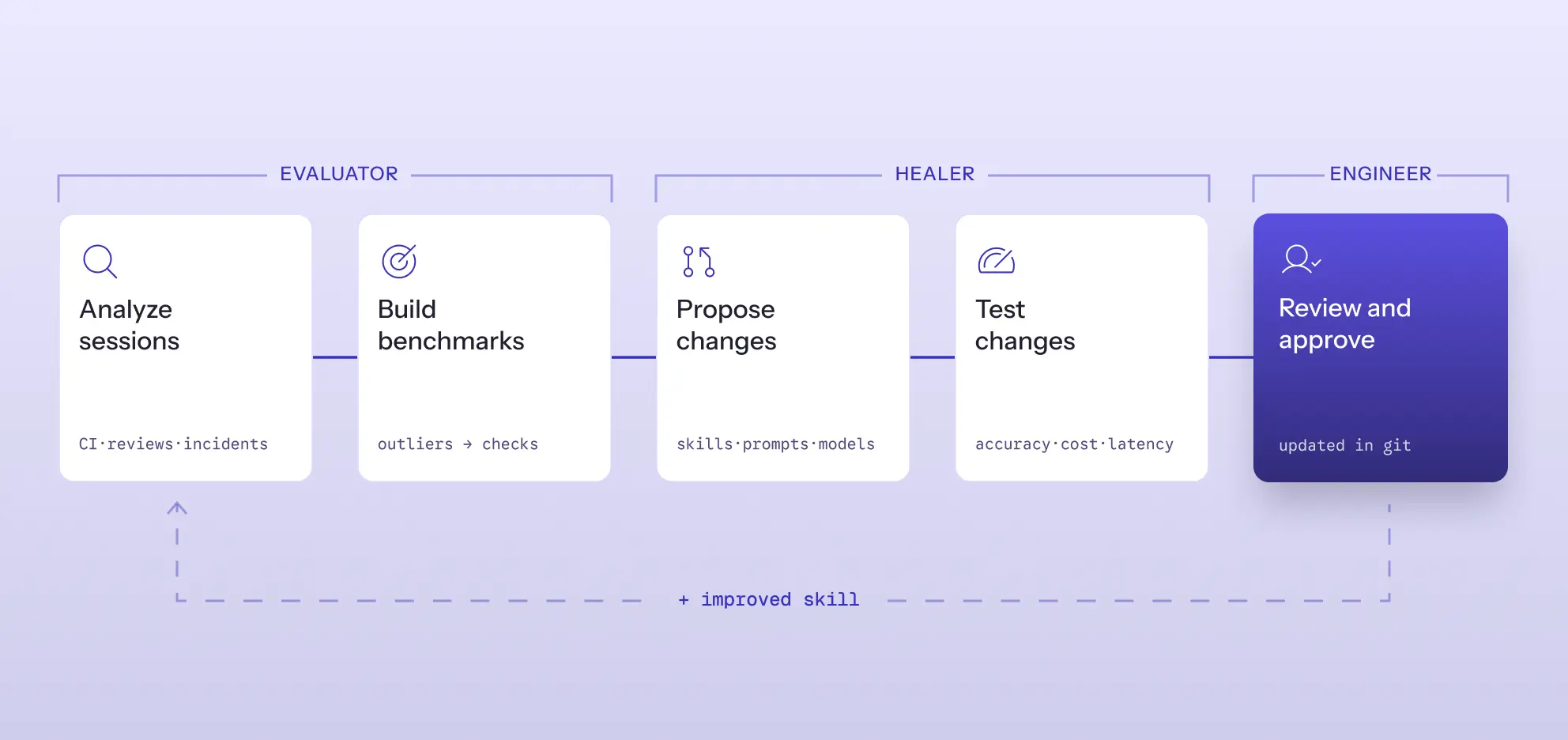
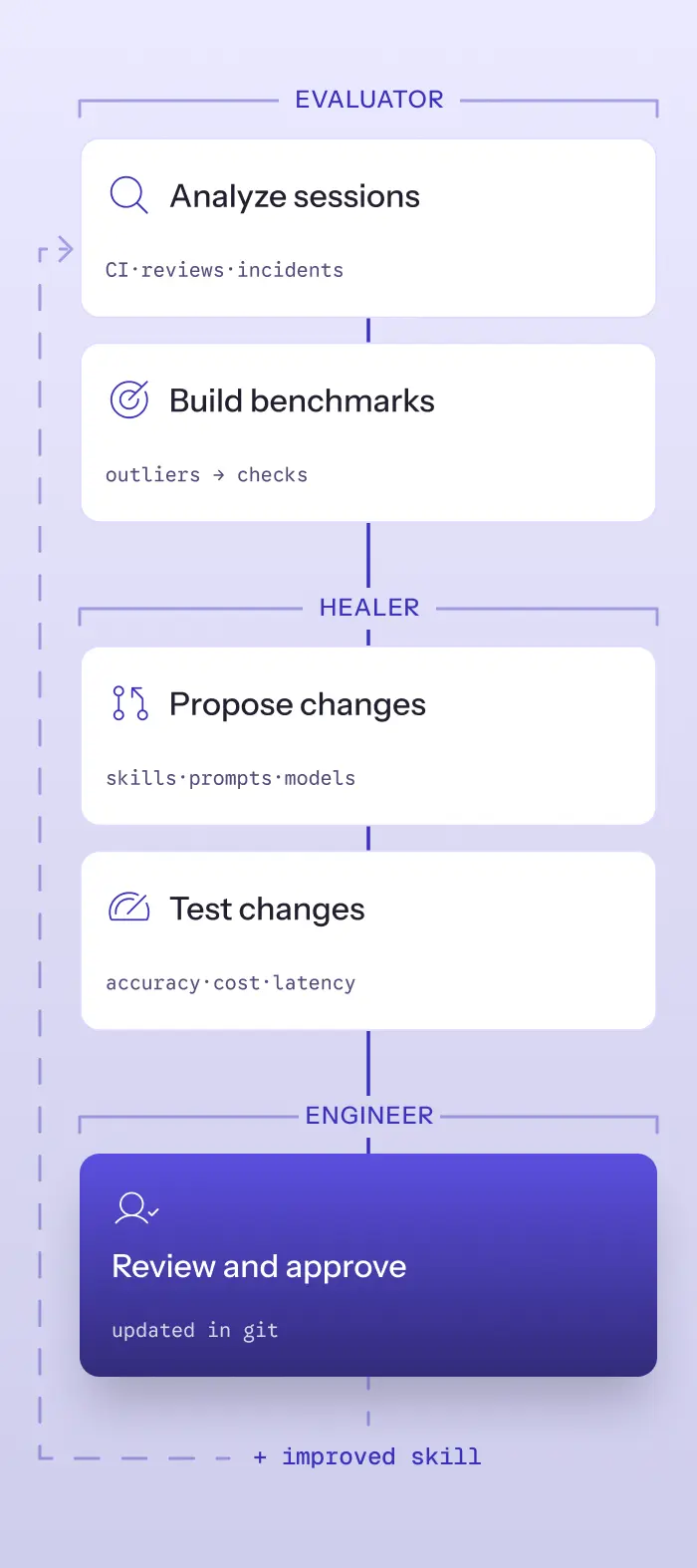
Autoheal provides
Evaluator and Healer agents, benchmark building, and testing for accuracy, cost, latency and regressions.
Platform team configures
Success criteria, benchmarks and approval requirements for every change.
One context graph links your systems with everything agents learn. Each run reads only its slice.


Autoheal provides
The graph itself, which links repositories, docs, tickets and telemetry with skills and memories that grow with every run.
Platform team configures
Which systems are connected, and the projects and profiles that scope each run.
Every factory agent run gets a secure, ephemeral sandbox in your cloud.
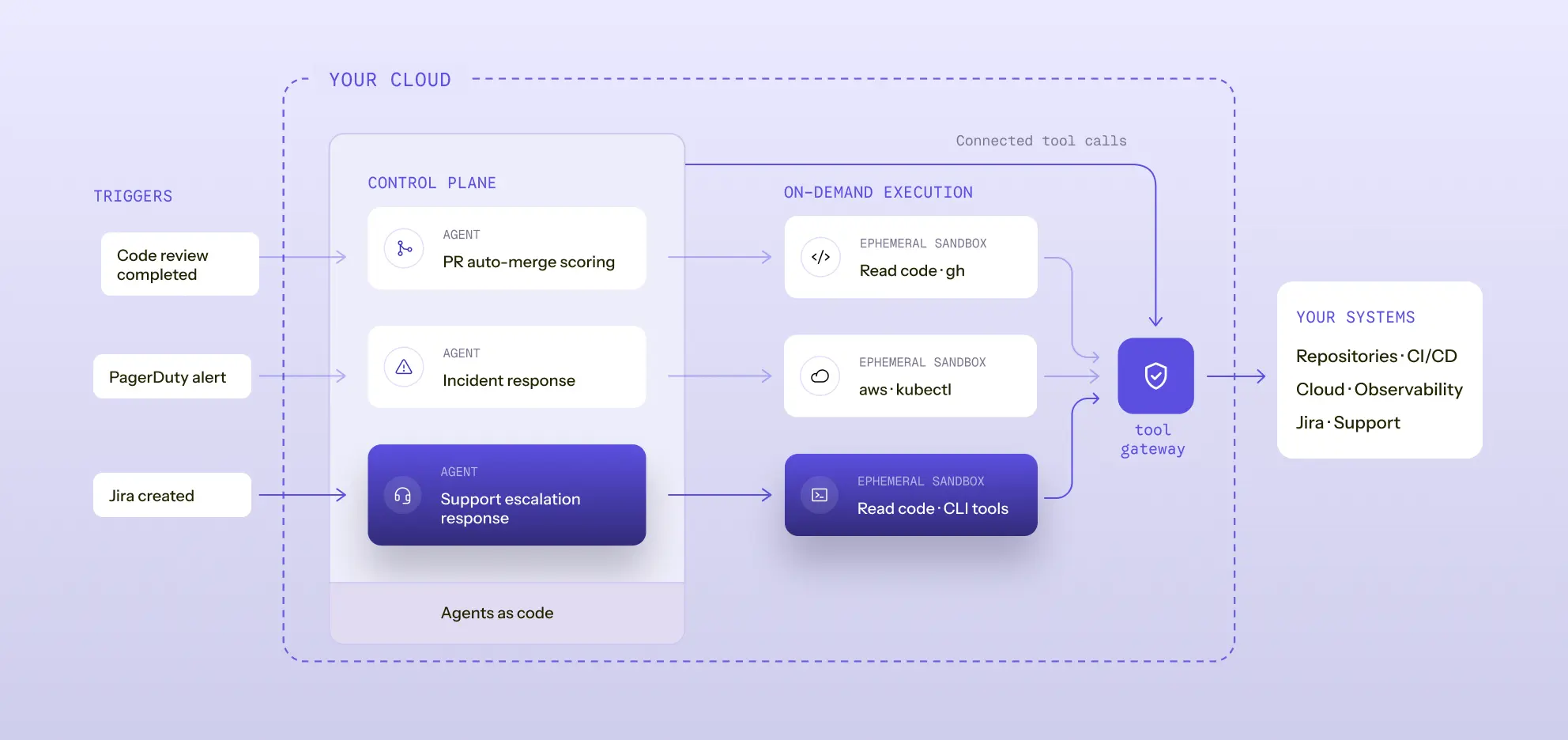
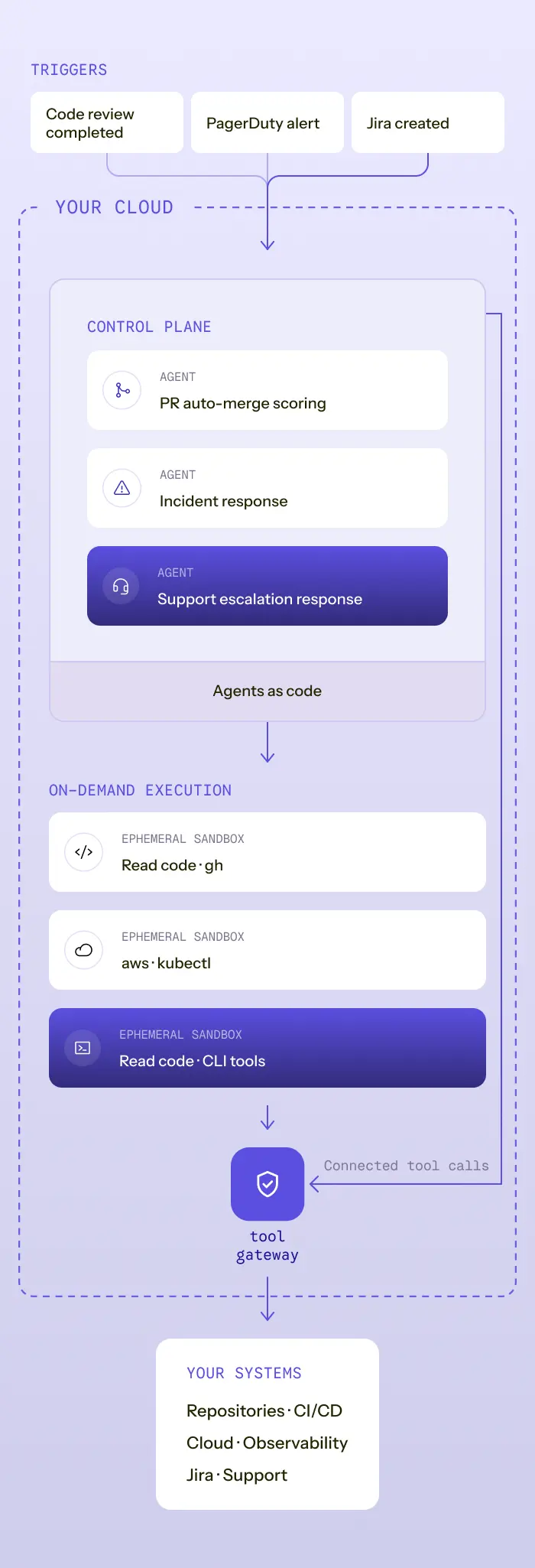
Autoheal provides
Cloud sandboxes with durable execution and scoped credentials that expire with the run, and the tool gateway to aws, gh, kubectl and MCP.
Platform team configures
Agent definitions in git: which agents run, their triggers, their models (bring your own key) and per-run budgets.
Every tool call is checked for identity, credentials and policy, and every decision is recorded.
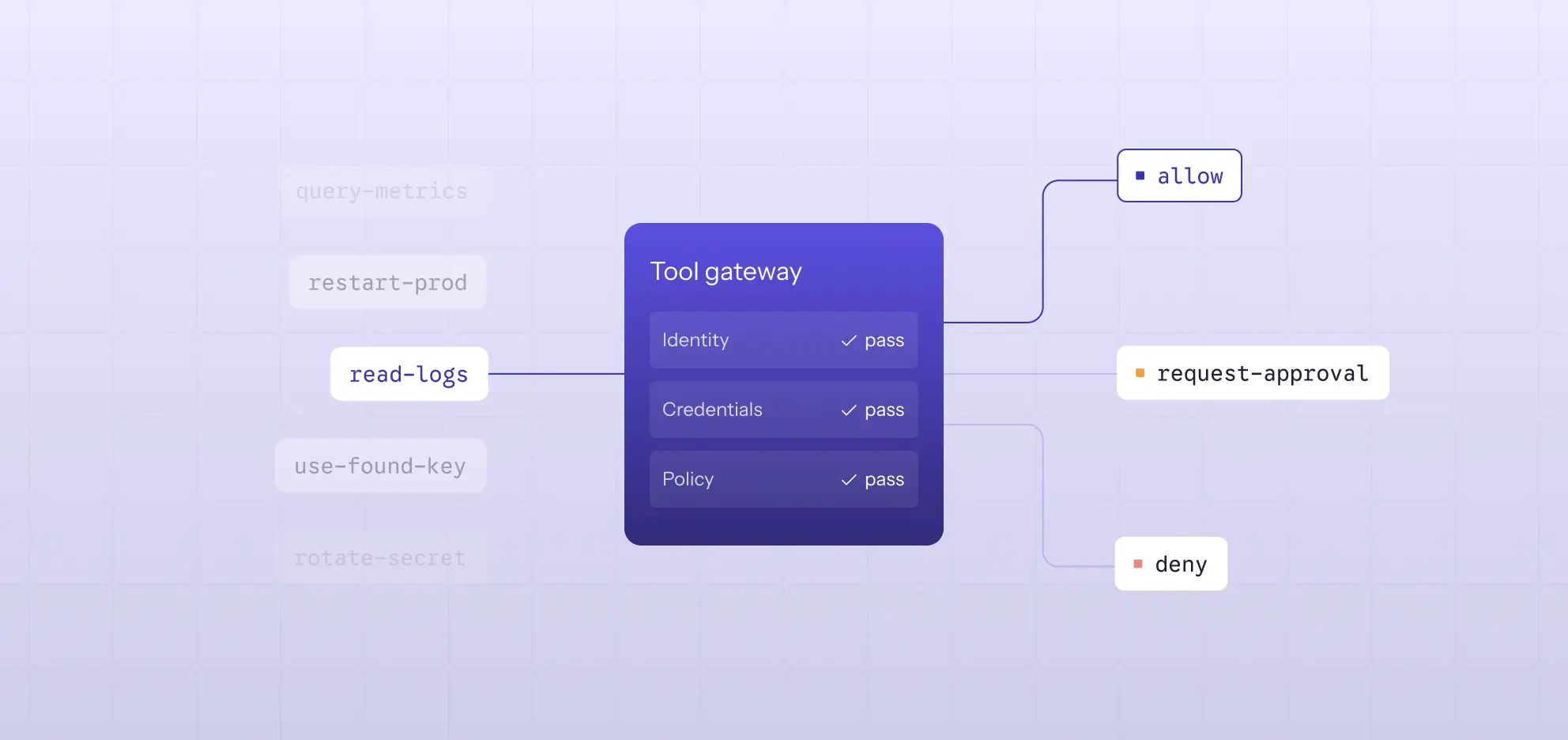

Autoheal provides
Enforcement at the gateway: credential checks against the registry, policy checks and an immutable audit log.
Platform team configures
Credentials (long-lived secrets stay in Vault), access policies and the named approvers for escalations.
Credentials, skills and ongoing performance
How access is controlled and agent quality is tracked over time.
Can an agent use credentials it finds on a VM or receives from a developer?
How do I know skills and agents stay accurate over time?
How do I know how a skill or agent is performing after 30 days?
Why separate the harness and the sandbox?

